What is ethnic rhinoplasty?
Ethnic rhinoplasty is rhinoplasty planned around the features of a patient’s background. The aim is to change the proportions the patient wants to change while keeping a nose that suits their face.
Skin thickness, the strength of the tip cartilage and the shape of the nostrils vary a lot between patients. These decide the technique more than any label does.
How is ethnic rhinoplasty performed?
Thicker skin usually needs a stronger tip structure, often with cartilage grafts, so that the shape stays defined as the swelling goes down.
Nostril width can be reduced with small incisions at the base of the nose when needed.
- Online planning: photos from the front, both sides and below show the skin, the tip and the nostrils.
- Video consultation: you explain what you want to change and what you want to keep.
- Examination in Istanbul: skin thickness, tip support and the nostrils are assessed and the plan is confirmed.
- The operation under general anaesthesia, usually 2 to 4 hours, most often with an open approach.
- Tip support: cartilage grafts make the tip strong enough to keep its shape under thicker skin.
- Bridge and nostrils: the bridge is adjusted if needed, and the nostril base is narrowed with small incisions only if this was agreed.
- One night in hospital, then rest at the hotel until the splint comes off after about 7 days.
Who is ethnic rhinoplasty for?
- Patients of Middle Eastern, African, Asian, Latin American or Mediterranean background, among others.
- Patients who want a change that still suits their face and background.
When it may not be the right choice
- Patients who want to remove the features of their background rather than adjust proportions.
- Patients expecting a very sharp, thin tip with thick skin. The skin sets limits on fine detail.
- Teenagers whose face is still growing.
- Patients who cannot wait more than a year for the final result, because thick skin settles slowly.
Can breathing be treated in the same operation?
Yes. The septum and turbinates are examined in every patient, and a blockage can be corrected in the same operation, as in a septorhinoplasty.
Wide nostrils or a weak tip can also affect airflow. Changes to the tip and nostrils are planned so that they do not narrow the airway.
Because Dr. Delioğlu is an ENT and head and neck surgeon, shape and function are planned together.
How is the operation planned?
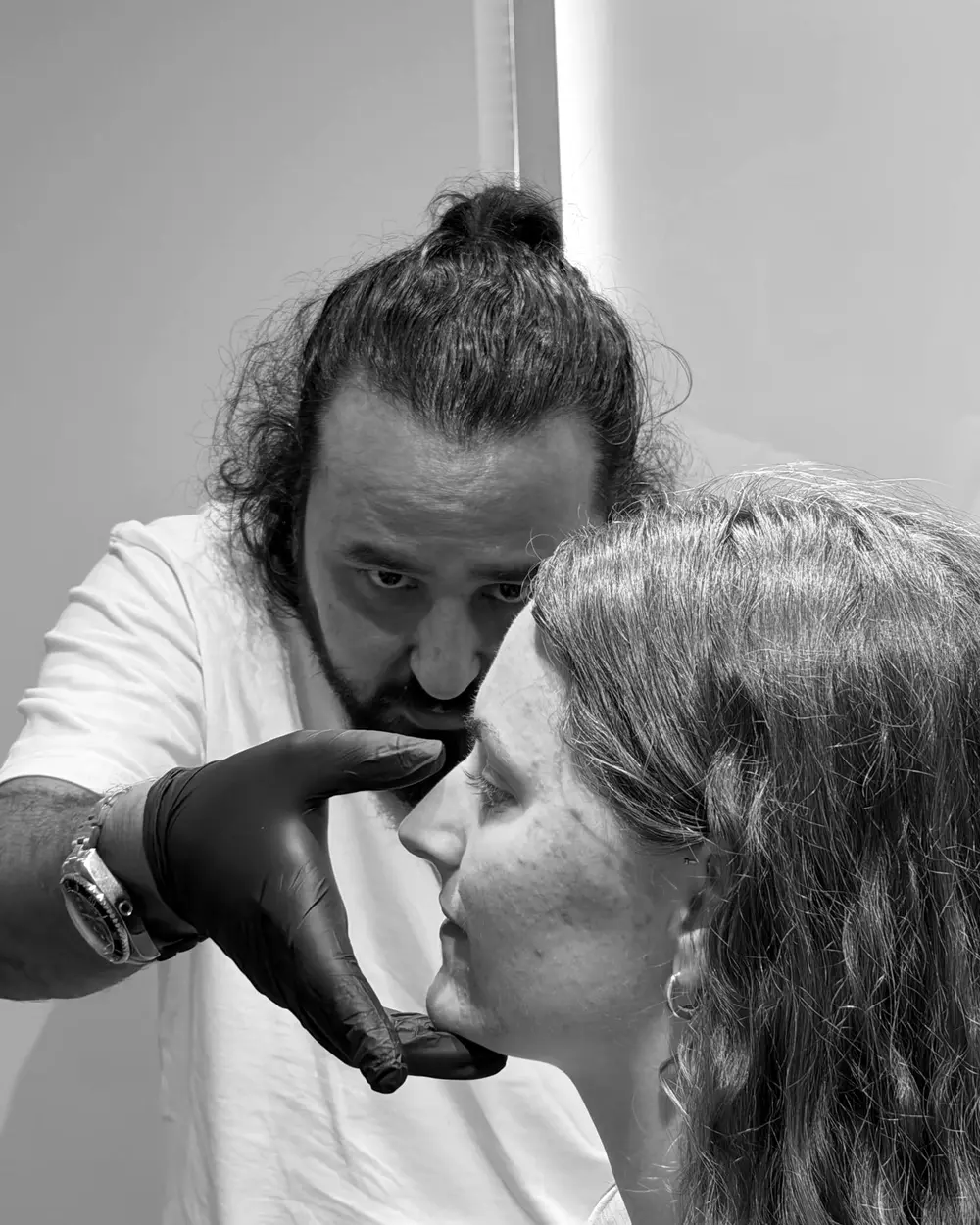
Photos from the front, sides and below show the skin, the tip and the nostrils. At the examination the surgeon explains how the skin will affect the final detail of the tip.
If nostril narrowing is part of the plan, it is agreed at the consultation. Nothing is changed that was not discussed.
How much does ethnic rhinoplasty cost in Turkey?
Ethnic rhinoplasty in Turkey generally costs $4,000 to $6,500. The tip often needs cartilage grafts, which is why the range is a little higher than a standard first rhinoplasty.
Your exact price comes with your written plan after the photo review. The cost page shows all six operations.
- How much needs to change: the bridge, the tip, the width, or all of them.
- Whether the septum and turbinates are treated for breathing in the same operation.
- Whether cartilage grafts are needed, and where they come from.
- The hospital, the length of the stay and what your package includes.
General range in Turkey. Your exact price comes with your personal plan after the photo review, with hotel and transfers included where your package has them.
All prices and what is includedWhat is recovery like after ethnic rhinoplasty?
- Day 1
- Discharge from hospital. Rest at the hotel with the head raised.
- Day 7
- The splint and stitches are removed at the clinic.
- Weeks 2 to 3
- Most of the bruising has faded. Most patients return to desk work.
- Week 6
- Sport is usually allowed again after the surgeon’s check.
- Month 3
- Most of the visible swelling has gone. The tip is still settling.
- Months 6 to 12
- The remaining swelling, mostly at the tip, goes down slowly. The final shape develops over this period.
How long should I stay in Istanbul?
Plan 7 to 10 days in Istanbul. You arrive a day before surgery, spend one night in hospital and rest at the hotel until the splint comes off.
With thicker skin, taping and skin care after the splint is removed are explained before you leave. Follow-up continues online. Do not book the return flight before the plan is confirmed. If the surgeon asks you to stay a day or two longer for a check, the team helps you change the dates. The guide to rhinoplasty in Turkey covers the whole trip.
When will I see the final result?
With thicker skin the swelling takes longer to settle, often more than a year at the tip. The shape becomes clearer month by month.
Taping and skin care advice after the splint is removed can help the swelling settle.
What are the risks, and how are they reduced?
The risks are those of any rhinoplasty. Thick skin adds one more consideration: how much of the new shape will show, and when.
- Long swelling at the tip: often more than a year with thick skin. Taping and follow-up help, and the tip is built with this in mind.
- Less definition than hoped: the skin limits fine detail. This is explained with your photos before surgery.
- Nostril scars: if the nostril base is narrowed, small scars sit in the natural crease and usually fade.
- Bleeding and infection: uncommon, reduced by stopping blood thinners, operating in a hospital and clear wound care.
- Asymmetry: sometimes visible once the swelling settles. A small touch-up is occasionally needed after a year.
- Anaesthesia risks: assessed before surgery. An anaesthetist is with you throughout.
Medically reviewed by Op. Dr. Kemal Caner Delioğlu, ENT and head and neck surgeon ·