What is septorhinoplasty?
Septorhinoplasty combines rhinoplasty with surgery on the septum, the wall of cartilage and bone between the two sides of the nose. It treats the shape of the nose and the airflow in one operation.
A deviated septum can block one or both sides of the nose and can also make the outside of the nose look crooked.
How is septorhinoplasty performed?
The deviated parts of the septum are straightened or removed. The cartilage taken out can be used as graft material for the shape.
Enlarged turbinates can be reduced in the same operation if they block the airway.
- Online planning: photos of the nose and a description of the blockage, for example which side, and whether it is worse at night.
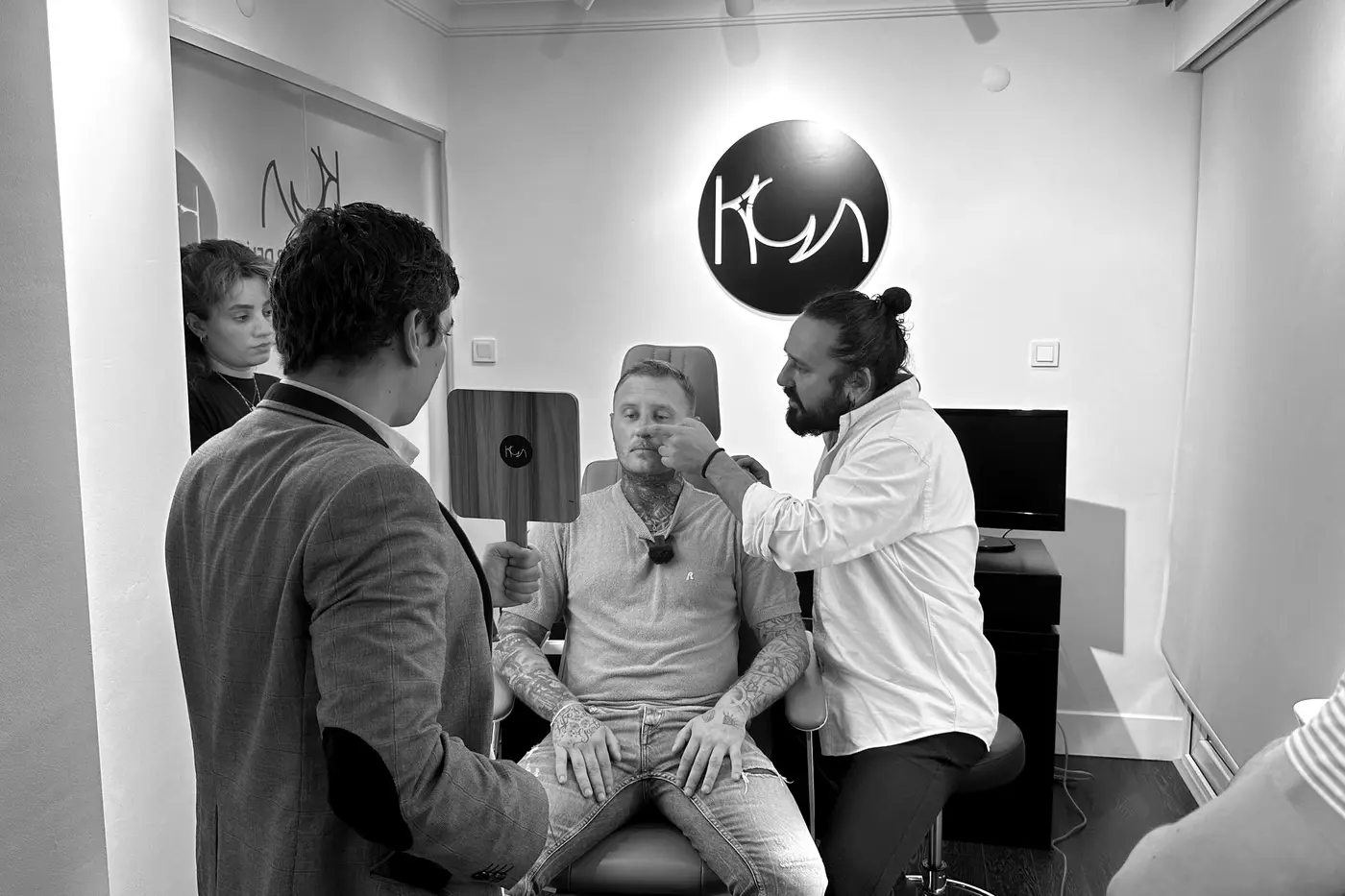
- Examination in Istanbul: the surgeon looks inside the nose and checks the septum, the turbinates and the nasal valves.
- The operation under general anaesthesia, usually 2 to 4 hours.
- The septum: deviated parts are straightened or removed, keeping enough support for the nose.
- The turbinates: if they are enlarged, they are reduced to open the airway.
- The shape: the bridge, the tip and the width are changed as planned. Septum cartilage can be used as graft material.
- Soft internal splints and an outer splint are placed. One night in hospital, then rest until the splints come out after about 7 days.
Who is septorhinoplasty for?
- Patients with a blocked nose on one or both sides caused by a deviated septum.
- Patients who also want to change the shape of the nose.
When it may not be the right choice
- Patients who only have a breathing problem and do not want any change to the shape. A septoplasty alone may be enough.
- Blockage caused mainly by allergy or sinus disease, which needs medical treatment first.
- Patients with an uncontrolled medical condition, until it has been assessed.
- Smokers who cannot stop before and after surgery.
Can breathing be treated in the same operation?
That is the purpose of the operation. A septorhinoplasty treats the septum and, when needed, the turbinates and nasal valves, together with the shape.
As an ENT and head and neck surgeon, Dr. Delioğlu examines the airway before planning the shape. Each part of the plan is explained: what is done for breathing and what for appearance.
Breathing improves as the swelling goes down over the following weeks. If you also have sinus problems, they are assessed at the examination. The shape is planned in the same way as a primary rhinoplasty.
How is the operation planned?
At the examination the surgeon looks inside the nose and checks the septum, the turbinates and the nasal valves. You will be asked when the blockage is worse, for example at night or on one side.
The plan covers both breathing and shape, and explains which parts belong to each.
How much does septorhinoplasty cost in Turkey?
Septorhinoplasty in Turkey generally costs $3,500 to $6,000. The range covers the work on the septum and turbinates together with the shape.
Your exact price comes with your written plan after the photo review. See the cost page for all six operations.
- How much needs to change: the bridge, the tip, the width, or all of them.
- Whether the septum and turbinates are treated for breathing in the same operation.
- Whether cartilage grafts are needed, and where they come from.
- The hospital, the length of the stay and what your package includes.
General range in Turkey. Your exact price comes with your personal plan after the photo review, with hotel and transfers included where your package has them.
All prices and what is includedWhat is recovery like after septorhinoplasty?
- Day 1
- Discharge from hospital. Rest at the hotel with the head raised.
- Day 7
- The splint and stitches are removed at the clinic.
- Weeks 2 to 3
- Most of the bruising has faded. Most patients return to desk work.
- Week 6
- Sport is usually allowed again after the surgeon’s check.
- Month 3
- Most of the visible swelling has gone. The tip is still settling.
- Months 6 to 12
- The remaining swelling, mostly at the tip, goes down slowly. The final shape develops over this period.
How long should I stay in Istanbul?
Plan 7 to 10 days in Istanbul. The internal and outer splints are removed together at the clinic after about 7 days.
Breathing through the nose is limited until then. Once the splints are out, most patients feel the airway opening as the swelling goes down. Do not book the return flight before the plan is confirmed. If the surgeon asks you to stay a day or two longer for a check, the team helps you change the dates. The guide to rhinoplasty in Turkey covers the whole trip.
When will I see the final result?
Breathing through the nose is limited in the first week because of swelling and the internal splints. It improves as the swelling goes down over the following weeks.
The outer shape follows the same timeline as other rhinoplasty: most swelling settles in months, the tip takes up to a year.
What are the risks, and how are they reduced?
Septorhinoplasty has the risks of rhinoplasty and of septum surgery. Most are uncommon and many can be made less likely.
- A blocked nose in the first week: expected because of swelling and splints. Saline rinses after the splints are out help.
- Bleeding: a small ooze is common at first. Blood thinners are stopped before surgery and you rest with the head raised.
- Septal perforation, a small hole in the septum: uncommon. Careful technique and keeping the lining of the septum intact lower the risk.
- Dryness or crusting: common for some weeks. Saline sprays and rinses are explained at discharge.
- Breathing that does not improve as much as hoped: sometimes linked to allergy or swelling. Follow-up continues until the nose settles.
- Anaesthesia risks: assessed before surgery. An anaesthetist is with you throughout.
Medically reviewed by Op. Dr. Kemal Caner Delioğlu, ENT and head and neck surgeon ·