
Rhinoplusty
Our name comes from a system: rhinoplasty, plus everything that goes with it.
- Rhinoplasty The operation
- Plus Face, plan, concierge, follow-up
- Rhinoplusty The system
Rhinoplasty, plus

Rhinoplasty is the medical name for nose surgery. We added a “plus” to it, because most of our patients do not travel for an operation alone. They travel for a process that takes place in another country.
Rhinoplusty is the name of the system used at Op. Dr. Kemal Caner Delioğlu’s clinic in Etiler. The operation is at its centre. The plus is everything around it: an assessment of the whole face, a treatment plan made for you, concierge support in Istanbul and follow-up after you fly home.
This is also why “plus” is set in bold in our logo.
Four parts of the system
All four start before you travel and continue after you fly home.
-
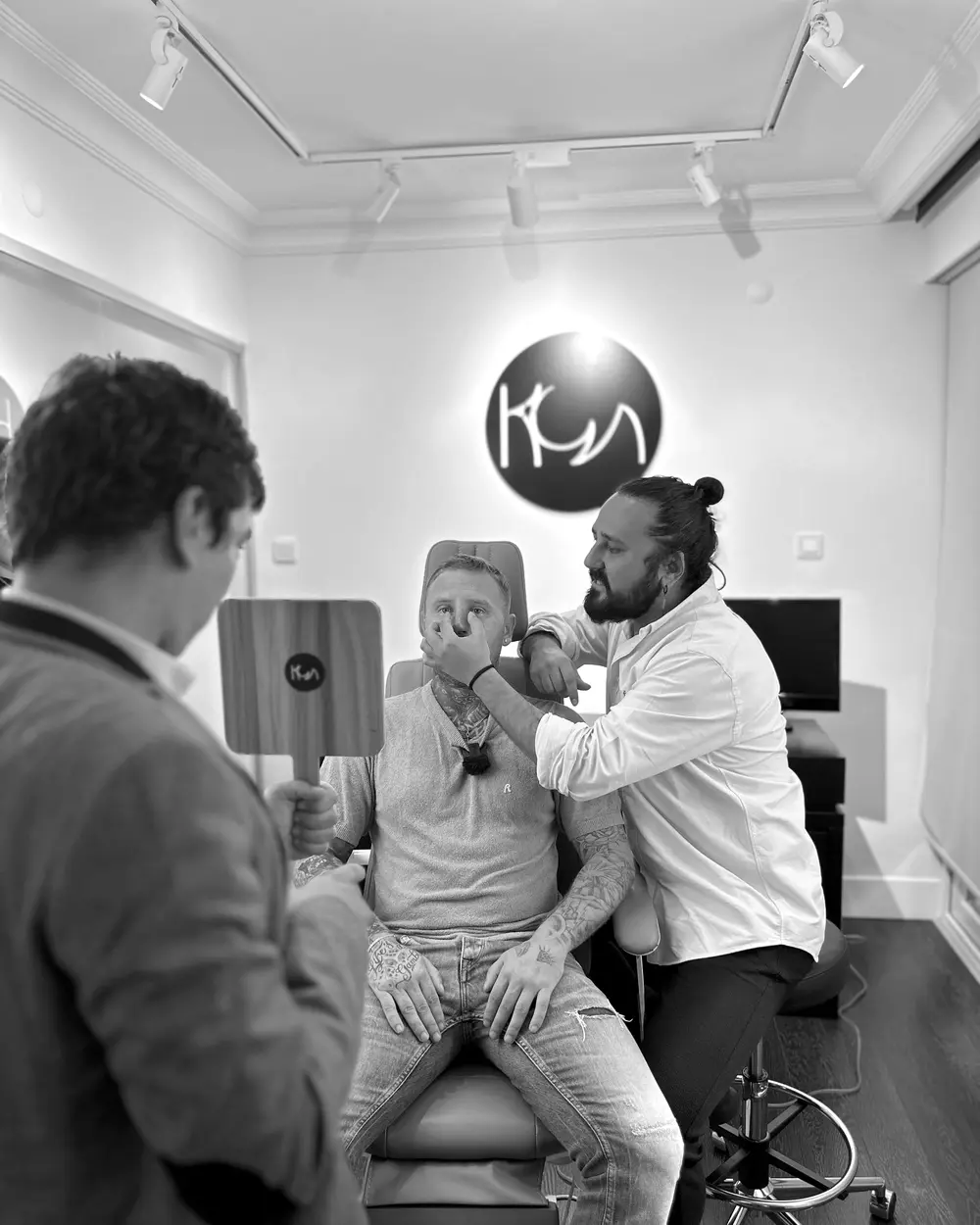
Facial harmony
The nose sits in the middle of the face and is not assessed on its own. At the examination the surgeon looks at the proportions between forehead, nose, lips and chin, and at the profile as a whole. The plan is built on how the nose fits your face. When it is useful, options for areas such as the chin or lips are also discussed, and the decision is made with you.
-
A personal treatment plan
Your photos and medical history are reviewed before you travel. In an online consultation Dr. Delioğlu talks you through the goals, the technique and the limits. Surgery, length of stay and follow-up dates become a written plan, so you know what will happen before you set off.
-
Concierge in Istanbul
From the moment you land, the clinic team looks after the practical side. Airport pick-up, transfers between clinic, hospital and hotel, appointments and accommodation are arranged for you. The team speaks English, French and Turkish.
-
Follow-up at home
You fly home after the splint comes off, but the process does not stop there. Follow-up continues in online consultations. Your photos are reviewed at set times and your questions are answered on WhatsApp.
Why Rhinoplusty
How the clinic is set up for patients who travel from abroad.
- 01
One surgeon, from start to end
The doctor you meet online is the one who examines you, operates and follows you up: Op. Dr. Kemal Caner Delioğlu.
- 02
Shape and breathing together
As an ENT and head and neck surgeon, Dr. Delioğlu plans the shape of the nose and how it works in the same operation.
- 03
A plan before you travel
Dates, length of stay and the technique are agreed before you book your flight.
- 04
One point of contact
A single team answers your questions on WhatsApp, before, during and after your stay.
- 05
Three languages
Consultations and support in English, French and Turkish.
- 06
Follow-up after you return
Online check-ups continue in the months after surgery, wherever you live.
The Process
Most of the planning is done before you travel. In Istanbul, the clinic team arranges transfers, accommodation and every appointment until your return flight.
-
Online consultation
Photos and medical history are reviewed before travel. The surgical plan and dates are agreed on a video call.
-
Arrival
Transfer from the airport to the hotel. Accommodation can be booked by the clinic team.
-
Examination
In-person examination at the clinic in Etiler, usually the day before surgery.
-
Surgery
Performed under general anaesthesia in a partner hospital in Istanbul.
-
Recovery
Rest in Istanbul. The nasal splint is usually removed after about seven days.
-
Follow-up
Check-ups continue online after you return home.
The Operations
The system is built around nose surgery. Start with what rhinoplasty is, then read about each technique.
- 01 What is rhinoplasty Shape and breathing, explained
- 02 Primary Rhinoplasty First surgery on the nose.
- 03 Revision Rhinoplasty Surgery on a nose operated on before.
- 04 Ethnic Rhinoplasty Changes the proportions, keeps the features.
- 05 Septorhinoplasty Shape and breathing in one operation.
- 06 Piezo Ultrasonic Rhinoplasty Ultrasonic shaping of the nasal bones.
- 07 Preservation Rhinoplasty The bridge is lowered, not removed.

Start with your photos
Send photos of your face from the front, the side and below. The surgeon reviews them and the team comes back to you with a first plan.