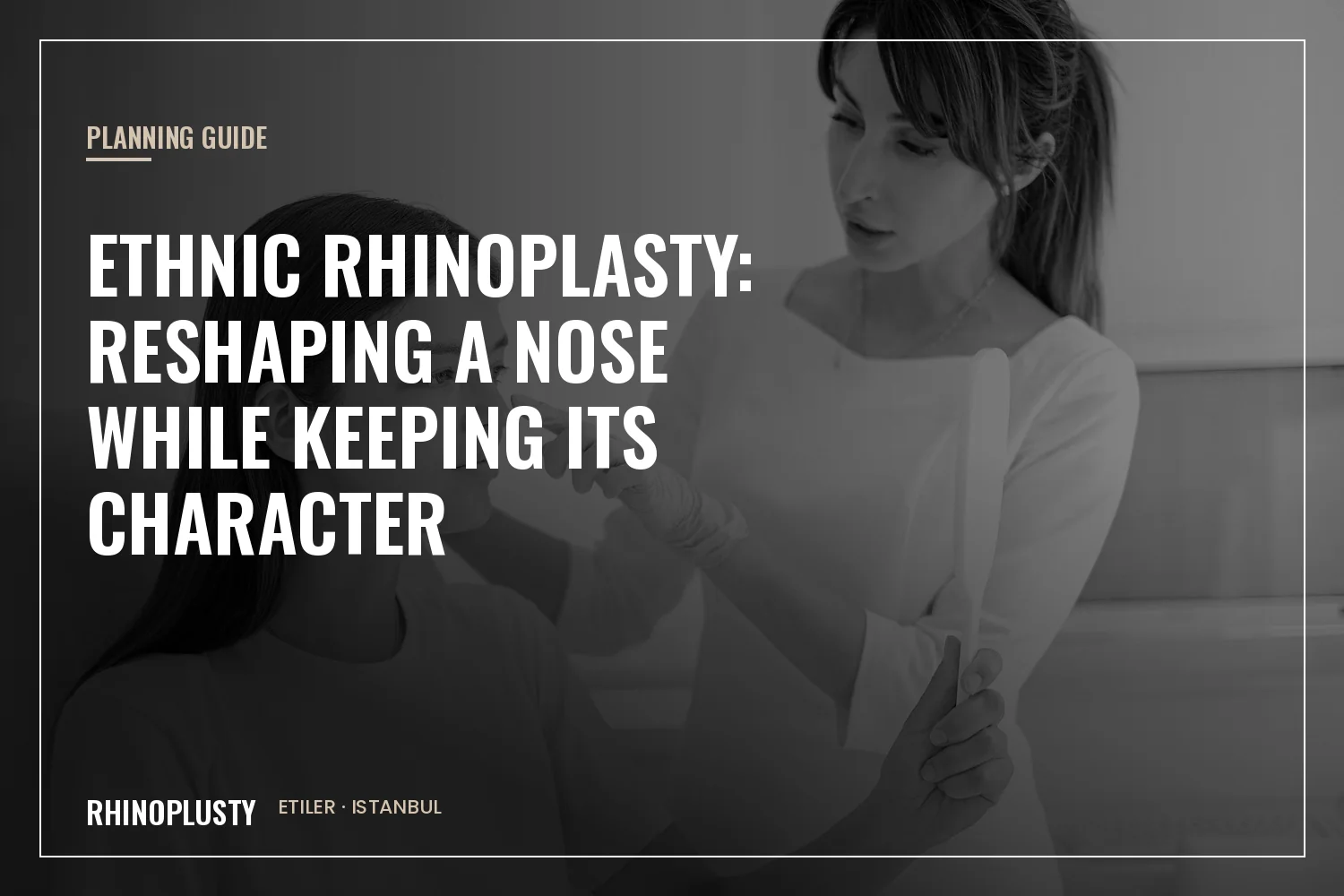
Ethnic rhinoplasty is an individualized planning conversation, not a single technique. Learn how skin thickness, bridge goals, swelling and facial proportions can shape a careful plan.
Ethnic rhinoplasty describes a rhinoplasty plan that respects the patient’s facial proportions, anatomy, heritage and goals. It is not one operation and it does not prescribe one ideal nose. Skin thickness, cartilage strength, breathing, bridge height and tip support all influence the discussion. This guide explains what to ask before travelling for care and why a natural result means a nose that fits the individual face.
- Ethnic rhinoplasty is a planning description, not a single technique.
- Thicker skin can soften definition and can make swelling take longer to settle.
- Bridge augmentation is considered only after examining anatomy, breathing and goals.
- A natural result is proportionate to the person, not a standard ethnic template.
- Online analysis can organize questions but cannot replace an examination.
What does ethnic rhinoplasty mean?
The phrase ethnic rhinoplasty is used for a planning conversation in which the surgeon considers the patient’s anatomy, facial proportions, family background, skin-soft-tissue envelope, breathing and personal goals together. It should not be treated as a catalogue of noses belonging to fixed groups. Two people who use the same search term may have very different bridge height, cartilage strength, nostril shape, skin thickness and functional concerns. The meaningful question is not which template applies, but which changes are safe, proportionate and consistent with the features the patient wants to keep.
A consultation should separate appearance from function. The surgeon may ask about airflow, previous injury, allergies, prior procedures and photographs from different angles. A plan can include refinement, support, reduction or augmentation, but no single manoeuvre is appropriate for everyone. The rhinoplasty treatment guide can help you prepare questions before a consultation.
How does thick skin change the plan?
Thick skin and a substantial soft-tissue envelope can cover small structural changes. Tip definition may therefore appear softer, and the visible result can evolve more slowly than a patient expects. That does not mean the skin alone determines the operation. Cartilage support, scar tissue, tissue quality, breathing and the relationship between the tip and bridge also matter. A careful plan explains what can be changed and what cannot be promised.
Recovery should be discussed in stages. Bruising and swelling are most noticeable early, while firmness and residual fullness can change over a longer period. Follow-up photographs and examinations are more useful than comparing the nose with another patient’s timeline. Ask when reviews occur, which symptoms are expected, and whom to contact if a concern appears after returning home.
Can the bridge be raised?
A higher bridge may be part of a plan when it improves balance or addresses a patient’s stated concern. The decision depends on the starting anatomy, the front and profile views, tip support, skin coverage, breathing and the desired degree of change. Bridge work is not automatically better, and a larger change can alter the relationship between the nose, eyes, lips and chin. The consultation should explain the proposed support and why it suits the individual face.
| Planning factor | Question to discuss |
|---|---|
| Skin and soft tissue | How might coverage affect visible definition and swelling? |
| Bridge | Would augmentation improve proportion without overpowering the face? |
| Tip support | What structure is needed for a stable, balanced tip? |
| Breathing | How will internal function be assessed and protected? |
How long does swelling last with thick skin?
There is no reliable single date when all swelling disappears. The early change can be obvious, but subtle fullness, firmness and tip definition often evolve gradually. Thick skin may make that evolution less predictable to the patient, so the surgeon evaluates progress at planned visits instead of judging the result from one photograph. Travel plans should leave enough time for the agreed checks, and a flight should not be booked around an assumed recovery milestone.
- Write down the features you want to preserve and the changes you want to explore.
- Share medical history, breathing symptoms, previous procedures and current medicines.
- Ask how skin, cartilage, bridge goals and function interact in your plan.
- Confirm the hospital, clinic, follow-up schedule and contact after travel.
- Use local medical services for an urgent problem rather than waiting for an online reply.
How do I aim for a natural result?
A natural result is personal: it should fit the face and remain consistent with the agreed goals rather than reproduce a celebrity or a generic online image. Bring several references and explain what you do not want changed. Ask for a realistic discussion of limits, asymmetry, healing and the possibility that photographs cannot predict the final appearance. Online analysis can organize the first questions, but an in-person examination remains necessary.
Frequently asked questions
What does ethnic rhinoplasty mean?
It means planning rhinoplasty around the patient’s own anatomy, facial proportions, heritage and goals. It does not name one operation or require the same shape for every patient.
Does thick skin prevent a refined result?
Thicker skin can soften visible definition and may prolong swelling, but the effect depends on the whole nose and the supporting tissues. The examination matters more than a label.
Can the bridge be raised?
Bridge augmentation may be discussed when it fits the anatomy and the patient’s goals. The surgeon must explain support, material, proportions, risks and recovery in the individual plan.
When should swelling be reviewed?
Swelling changes gradually and does not follow one exact calendar. Early appearance is not the final assessment; scheduled reviews help the team judge healing over time.
How can I avoid an unnatural result?
Bring clear reference images, describe what you want to preserve, ask how breathing will be considered, and request a written explanation of limits rather than choosing a copied shape.
Medically reviewed by Op. Dr. Kemal Caner Delioğlu, ENT and head and neck surgeon ·
This article is general information. It does not replace an examination.