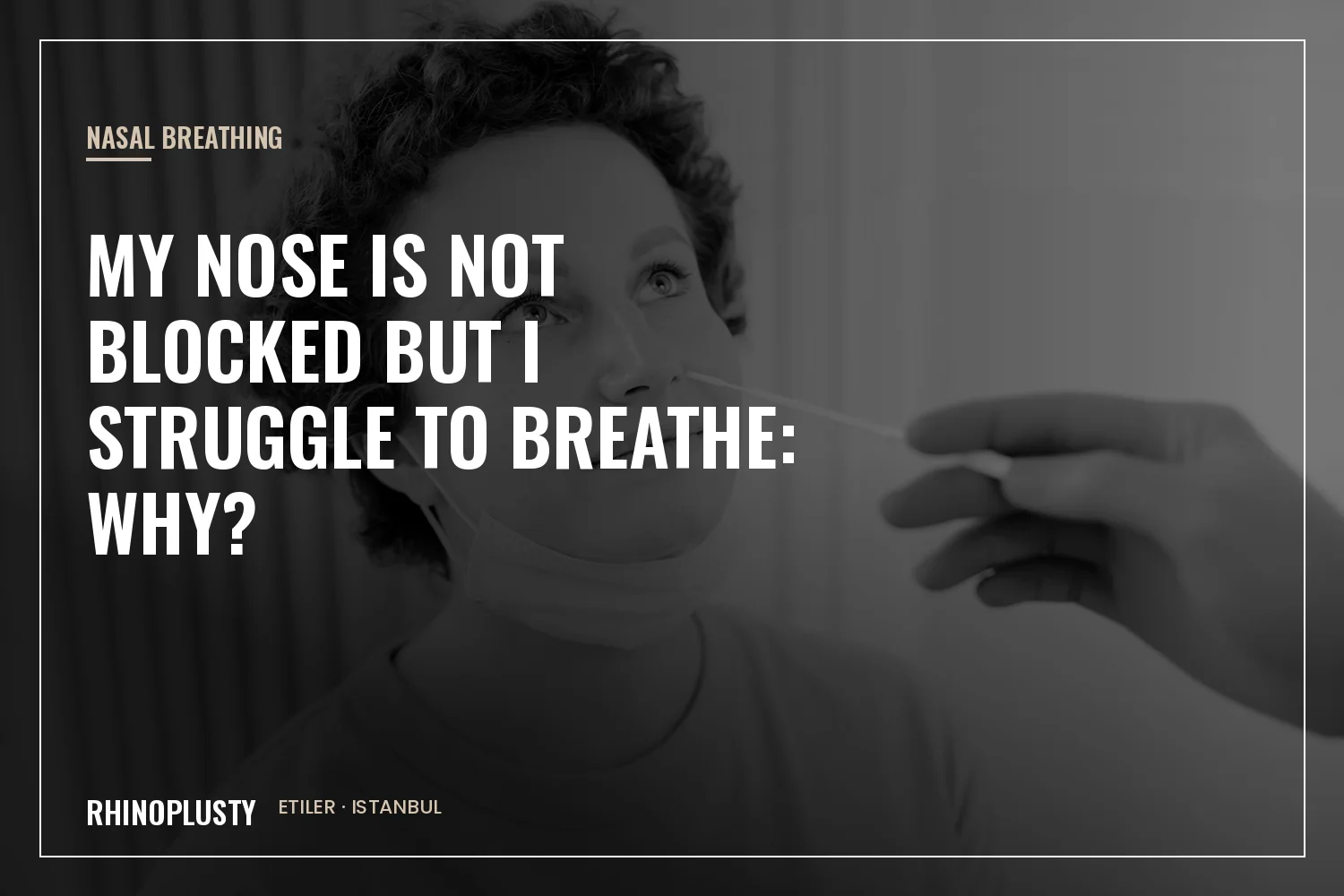
Breathing can feel difficult even when the nostrils look open. The nasal valve, septum, turbinates, allergies and mouth breathing can all contribute.
A nose can look open while airflow still feels limited. Narrowing at the nasal valve, a deviated septum, enlarged turbinates, allergy or poor airflow during exertion may increase resistance. Compare each nostril gently, note when symptoms occur, and arrange an examination if the problem persists or affects sleep and exercise.
- The nasal valve is the narrowest part of the nasal airway.
- A simple one-nostril observation can describe the pattern but cannot diagnose it.
- Doctors examine the valve, septum, turbinates and sometimes the nasal cavity with an endoscope.
- Sudden severe breathing difficulty, blue lips or chest pain needs emergency help.
What is nasal valve collapse?
The nasal valve is the narrow passage near the nostril entrance. If its sidewall narrows during inhalation, breathing may feel effortful even when there is no mucus. The sensation can worsen during sport, deep inhalation or when lying down. A strip or temporary external support may change airflow, but improvement with one does not prove the diagnosis.
Septum, turbinates or valve: which one is it?
A deviated septum can reduce the space on one side. Turbinates are normal structures that warm and humidify air, but allergy or inflammation can enlarge them. The valve can be narrow because of the sidewall, the shape of the nostril or earlier injury. More than one factor may be present, so symptoms alone cannot select a treatment.
| Pattern | What a clinician considers | What happens next |
|---|---|---|
| Airflow worsens on deep inhalation or exercise | Nasal valve narrowing | Examine the sidewall and dynamic movement |
| One side consistently feels less efficient | Septum shape or turbinate size | Inspect both sides and the history |
| Seasonal symptoms, sneezing or itch | Allergy-related swelling | Discuss allergy assessment and treatment |
| Night mouth breathing and snoring | Nasal resistance or sleep issue | Review sleep symptoms and nasal airway |
How is it checked?
Start by recording whether one or both sides are affected, whether exercise changes it, and whether a gentle outward lift of the cheek changes the sensation. Close one nostril at a time without forcing air. Do not push objects into the nose. In clinic, the history is combined with inspection of the nostril entrance, valve, septum and turbinates; an endoscopic examination may be useful. Your breathing goals and previous injury or surgery also matter.
What treatments exist?
A treatment plan follows the finding. Saline can reduce thick secretions, while appropriate allergy treatment may reduce swelling. Structural problems may be addressed with septal, turbinate or nasal valve surgery, sometimes together when shape and breathing affect one another. The choice depends on anatomy, symptoms and examination rather than the appearance of the nose alone. See septorhinoplasty treatment and request an online analysis for a structured discussion.
- Compare the right and left nostril separately at rest and during a slow deep breath.
- Record exercise, sleep, allergy, injury and previous surgery links.
- Seek assessment if the problem persists or limits daily activity.
- Call emergency services for sudden severe breathlessness, blue lips, fainting or chest pain.
Persistent nasal breathing difficulty deserves an examination even when the nose looks open. A personalised plan should address the actual source of resistance.
Frequently asked questions
What is nasal valve collapse?
It is narrowing or inward movement of the sidewall at the nasal valve during breathing. People may notice worse airflow when exercising or inhaling deeply, sometimes with an open-looking nostril.
Can mouth breathing at night be a sign?
Yes. Dry mouth, snoring and waking with an open mouth can occur when nasal airflow is insufficient, although sleep and throat conditions can also contribute.
Can a deviated septum cause this without a blocked nose?
Yes. A bend in the septum can make one side less efficient even when you do not describe it as blocked. Turbinate swelling and allergy may add resistance.
What treatment might help?
Treatment depends on the cause. Saline care or allergy treatment may help some people; structural narrowing may need a personalised procedure plan. There is no single operation for every nose.
Medically reviewed by Op. Dr. Kemal Caner Delioğlu, ENT and head and neck surgeon ·
This article is general information. It does not replace an examination.