Learn when showering, washing your hair and cleaning your face are usually safe after rhinoplasty, how to protect the cast, and when heat or bleeding needs medical advice.
After rhinoplasty, you can usually wash from the neck down soon, but a full shower depends on the cast, tape, incisions and your surgeon's instructions. Keep the nose and external dressing dry, use lukewarm water, avoid bending and heat, and wait for clearance before baths or sauna.
- A sponge bath or neck-down wash is often easiest during the first 24 to 48 hours.
- Keep the cast, tape and healing incision completely dry and do not remove them yourself.
- Wash hair with the head tilted back or with help, without hot water or forceful rubbing.
- After cast removal, wash the face gently only when the surgeon confirms that healing allows it.
- Avoid baths, swimming, hot tubs and sauna until the surgical team clears them.
When can I shower after rhinoplasty?
The safest first wash is often a sponge bath or a shower from the neck down during the first 24 to 48 hours. A full shower is not decided by the calendar alone. The cast, tape, internal splints, incision and type of operation all matter. While the external dressing is present, keep it dry and do not direct water at the bridge or tip. Use lukewarm rather than hot water, keep the bathroom ventilated and make the wash brief. If your written instructions allow a shower sooner or require a longer wait, those instructions take priority. Feeling well does not mean that the dressing is ready to get wet.
How do I keep the cast dry?
Protect the cast from spray, steam and accidental touching. A handheld shower aimed at the shoulders, a high collar of clean clothing and a towel around the hair can reduce splashes, but improvised plastic covers must not press on the nose. Do not soak the face, use facial steam or hold a hot shower close to the dressing. If the cast becomes damp, do not use a hot hairdryer and do not try to retape it. Pat nearby skin dry and ask the surgical team what to do. Internal splints and packing should never be pulled or adjusted at home.
How can I wash my hair without bending forward?
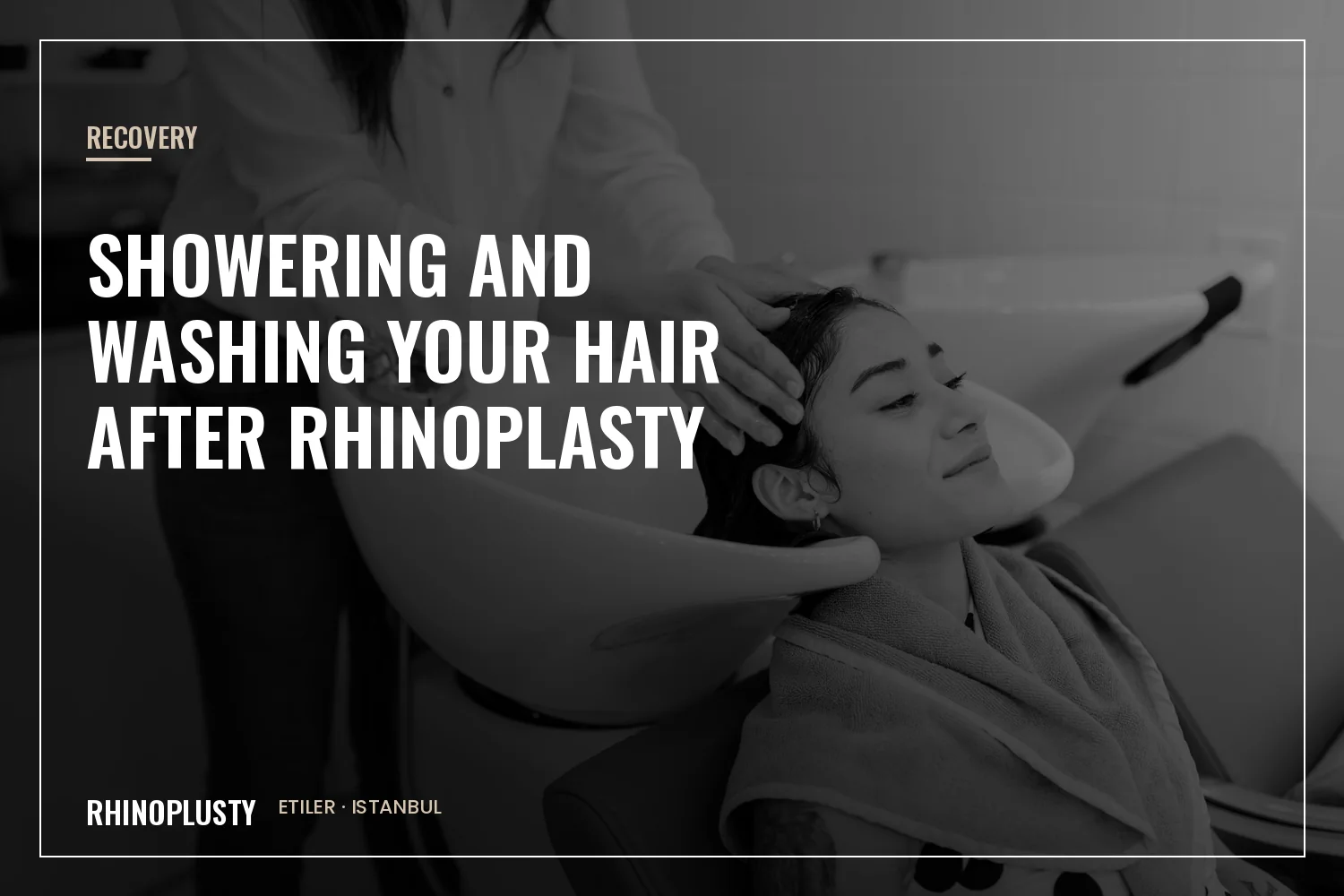
Keep your head upright or tilt it backwards while another person rinses the hair from behind. A basin or salon-style wash can be easier than leaning over a sink. Use a mild shampoo, lukewarm water and slow movements; avoid vigorous scrubbing, a strong spray and a hot hairdryer near the nose. If you must wash alone, prepare towels, shampoo and clean clothes first so you do not stretch, lift or search while wet. Stop if you feel dizzy, pressure in the face, fresh bleeding or increasing pain. Do not blow the nose after washing. Let drainage fall naturally and sneeze with the mouth open if needed.
When can I wash my face normally?
After the cast is removed and the surgeon confirms that the skin is closed, gentle face washing is usually easier. Use lukewarm water and a mild cleanser around the nose, then pat dry with a clean towel. Do not rub the bridge, squeeze the tip, exfoliate, apply retinoids or massage a healing incision unless these actions are prescribed. Makeup and cosmetic treatments should wait until the skin is ready. A swollen or numb nose may not notice pressure accurately, so visual gentleness is not enough: keep contact light and follow the written plan.
Can I take a bath or use a sauna?
Prefer a short shower to soaking while the wounds and dressing heal. Baths, swimming, hot tubs, sauna and steam rooms add heat, moisture and contamination risk, and heat can worsen swelling. Wait for the surgical team to confirm that external and internal wounds are healed. The timing varies with the operation, packing, crusting and any wound issue, so a fixed day is not suitable for everyone. Exercise and heavy lifting may also need a separate pause. Read the rhinoplasty recovery guide and prepare questions for an online analysis if your instructions are unclear.
What should I do if washing causes a problem?
Stop the wash and sit upright if bleeding, dizziness or pressure starts. Follow the bleeding instructions given by your team and contact them if bleeding persists or becomes heavy. Seek urgent medical care for difficulty breathing, fainting, rapidly increasing swelling, fever, spreading redness, pus, worsening pain, new visual symptoms, continuous clear watery drainage or a significant blow to the nose. A wet or displaced cast also needs advice. Do not diagnose the problem from the appearance in a mirror and do not remove a dressing to inspect it.
| Time or situation | Safer washing plan | What to avoid |
|---|---|---|
| First 24 to 48 hours | Sponge bath or neck-down wash if permitted | Full spray, bending and hot water |
| Cast or tape present | Keep dressing dry; wash hair backwards with help | Soaking, steam and touching the cast |
| After clearance | Lukewarm shower and gentle fingertips | Scrubbing, pressure and facial treatments |
| Until review | Ask before bath, swimming or sauna | Heat, hot tubs and unapproved soaking |
For the operation-specific plan, read the primary rhinoplasty treatment page and contact the surgeon's team.
Frequently asked questions
When can I wash my face normally?
Many people can clean around the dressing early, but normal face washing usually waits until the cast is removed and the surgeon confirms that the skin and incisions are ready. Use lukewarm water and light fingertips, not scrubbing or pressure.
Can I wash my hair with the cast on?
Only if the cast stays completely dry. Tilt the head backwards, use a handheld shower or ask another person for help. A salon wash can be practical if the nose is protected, but follow the operating team's instructions first.
What if the cast gets wet?
Do not loosen or remove it yourself. Pat the surrounding skin dry, avoid heat and contact the surgical team for instructions, especially if the dressing has softened or moved.
When can I use a sauna or take a hot bath?
Heat, steam and soaking can increase swelling and may disturb healing skin. Wait until wounds have healed and your surgeon has specifically cleared sauna, steam rooms, hot baths, swimming and hot tubs.
Can I bend forward to wash my hair?
Avoid keeping the head below the heart during early healing. Bending and straining can increase pressure, swelling or bleeding. Keep the head upright or tilt it backwards instead.
Medically reviewed by Op. Dr. Kemal Caner Delioğlu, ENT and head and neck surgeon ·
This article is general information. It does not replace an examination.